


Blankney Estates is an historic working Estate in the heart of Lincolnshire that have a diverse & innovative portfolio of business activities. One of these is British Chlorophyll Company, one of Europes largest producers of naturally sourced Chlorophyll, the green pigment that is found in grass. Blankney Estates had a demand to expand crop drying production and diversify their product offering at the same time but wanted to limit the environmental impact from this.
The estate engaged NerG to identify the best biomass solution for them, one that would deliver them the energy they needed whilst reducing costs & minimising their environmental impact. The brief was to find a solution that met their current request of burning wood fuel, but have the capacity to burn straw in the future if this became more economical.
Working closely with the client, NerG developed the concept of using 2 x 3MW Justsen boilers that had been specially designed to be able to convert to straw at a later date. After initial concept agreement, NerG set too and developed a 3D model of the proposed installation to ensure that the whole project worked from an installation perspective, but also critically from an ongoing operational perspective. This can be seen below:
- Environmental benefits
- If a renewable solution had not been found, a natural gas drying solution would have been installed
- By using biomass, there is a huge saving of over 3,800 Tonnes of CO² emissions annually, a saving of 92% over gas
- Financial benefits
- The biomass installation is eligible for the Government Renewable Heat Incentive, making this a cost-competitive installation against a fossil fuel alternative
- Fuel security
- The plant will primarily operate in the summer months, which is out of the traditional heating season
- As a result, fuel supply is readily available as many producers of wood fuel generate woodchips year-round, but have fewer clients with summer heating loads.
- Supporting local commerce
- Blankney Estates is always keen to support the local economy, maintaining a competitive market position and securing jobs.
- By sourcing their fuel locally, the Estate will not only be reducing their carbon footprint for the wood they use, but also will support local businesses who supply, process and transport wood fuels.
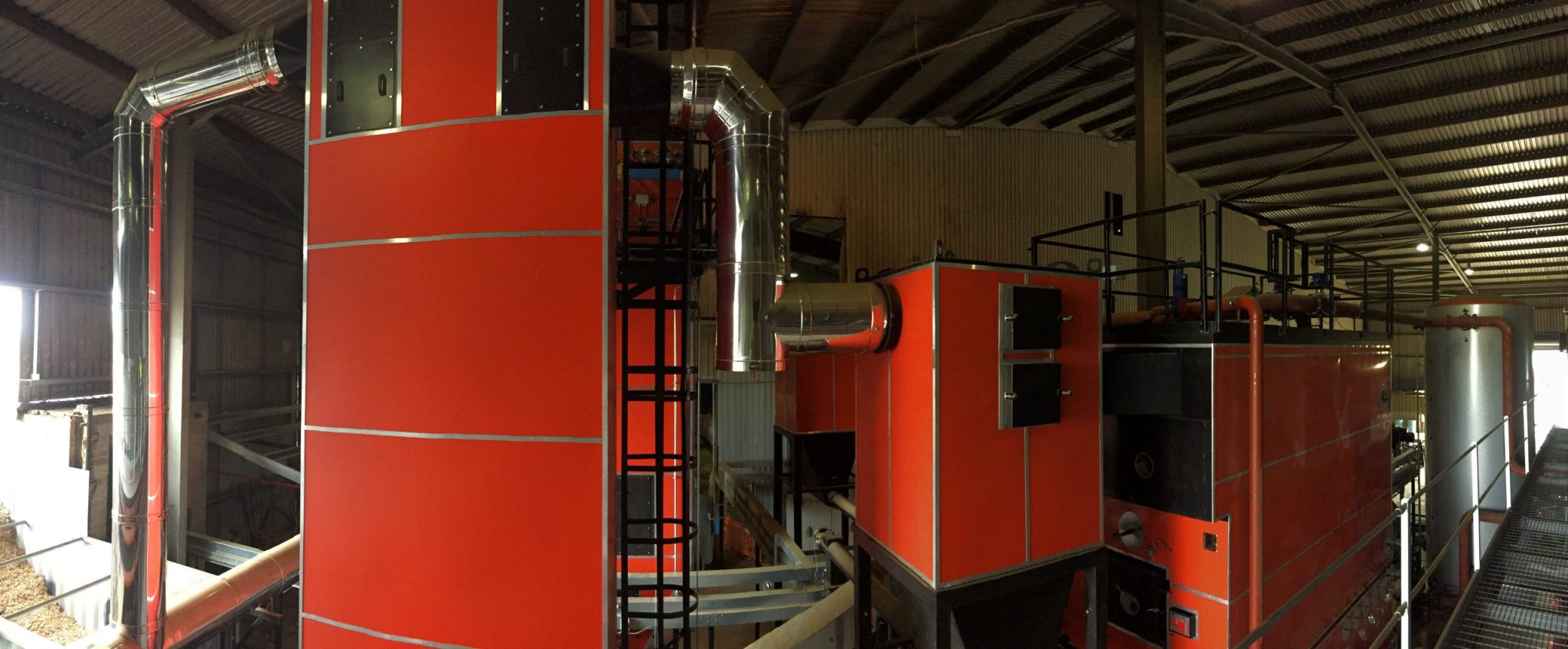

5MW

5 Passes for Optimum Efficiency

Integration with a Perry Engineering bed drier


